IN CLASS
An hour a week
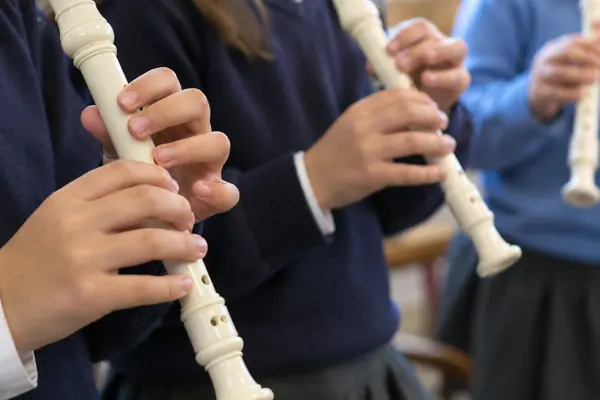
The plan says schools should deliver high-quality curriculum music for at least one hour a week in key stages 1 to 3, that is years 1 to 9.
Pick a school stage
 soundboardkids
WHAT THE NATIONAL PLAN SAYS
1 HOUR of music a week
Music is meant for every pupil, not a few.
England's national plan for music education, published in June 2022 with a vision to 2030, says all children should learn to sing, play an instrument and make music together. Here is what that looks like from year 1 to year 11.
Updated
Pick a school stageTHE SHORT ANSWER
The plan sets out what a great music education includes.
Three parts matter most for families.
IN CLASS
The plan says schools should deliver high-quality curriculum music for at least one hour a week in key stages 1 to 3, that is years 1 to 9.
Pick a school stageINSTRUMENTS
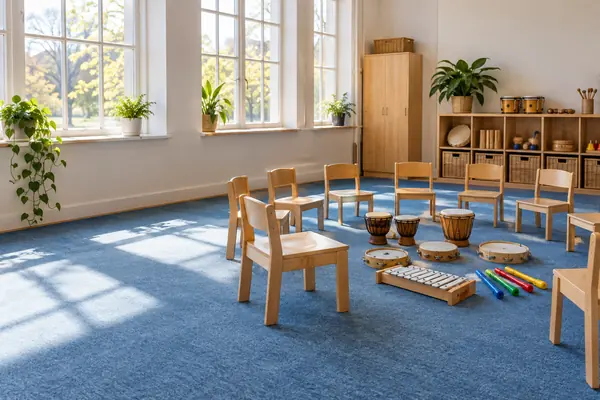
Mainly in key stage 2, music hubs offer whole-class or group instrument lessons so every child can learn an instrument in class time, ideally for at least a year.
See the numbersBEYOND LESSONS
A great music education also includes a school choir and ensemble, chances to perform, and going to live performances at least once a year.
What to askA QUICK STAGE CHECK
Pick a stage of school to see what the national curriculum and the national plan describe. The bar shows how far instrument learning is expected to go.
Based on the national plan for music education (2022) and the national curriculum in England for music. Schools put it into practice in their own way.
TWO NUMBERS WORTH KNOWING
One figure for the classroom,
one for how far music hubs reach.
1 hour a week
Curriculum music, years 1 to 9
The plan says schools should timetable high-quality curriculum music for at least one hour each week in key stages 1 to 3, and admits this will take time to realise.
CLASSROOM · NATIONAL PLAN
≈ 91%
Primary schools hubs worked with
Before the Covid-19 pandemic, music hubs across England worked with around 91% of primary schools and 88% of secondary schools, the plan says.
MUSIC HUBS · NATIONAL PLAN
Alongside the plan, the government announced £25 million for musical instruments and equipment, including music technology.
FOUR THINGS PARENTS CAN DO
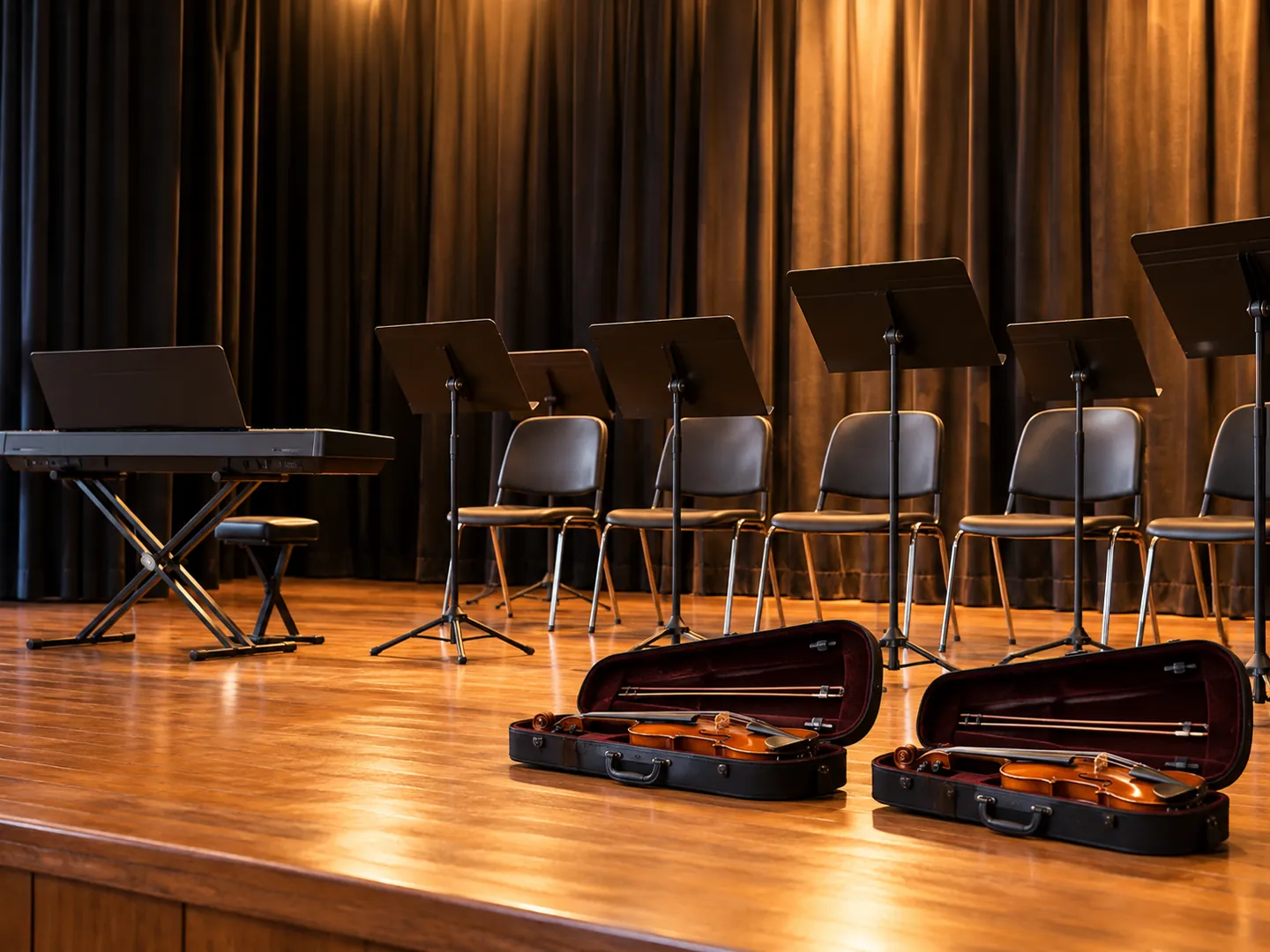
Every school's music offer looks a little different. These steps use what the Department for Education already asks schools to publish.
Schools were asked to publish a summary of their music development plan on their website before the 2024 to 2025 school year, and update it each year.
Find out which instruments are taught in class, in which year, and what lessons are available after that.
Arts Council England has contact details for local music hubs. If you are not sure, the government suggests asking a teacher.
Ask about the school choir, bands and concerts, and about trips to hear live music.
HOW IT FITS TOGETHER
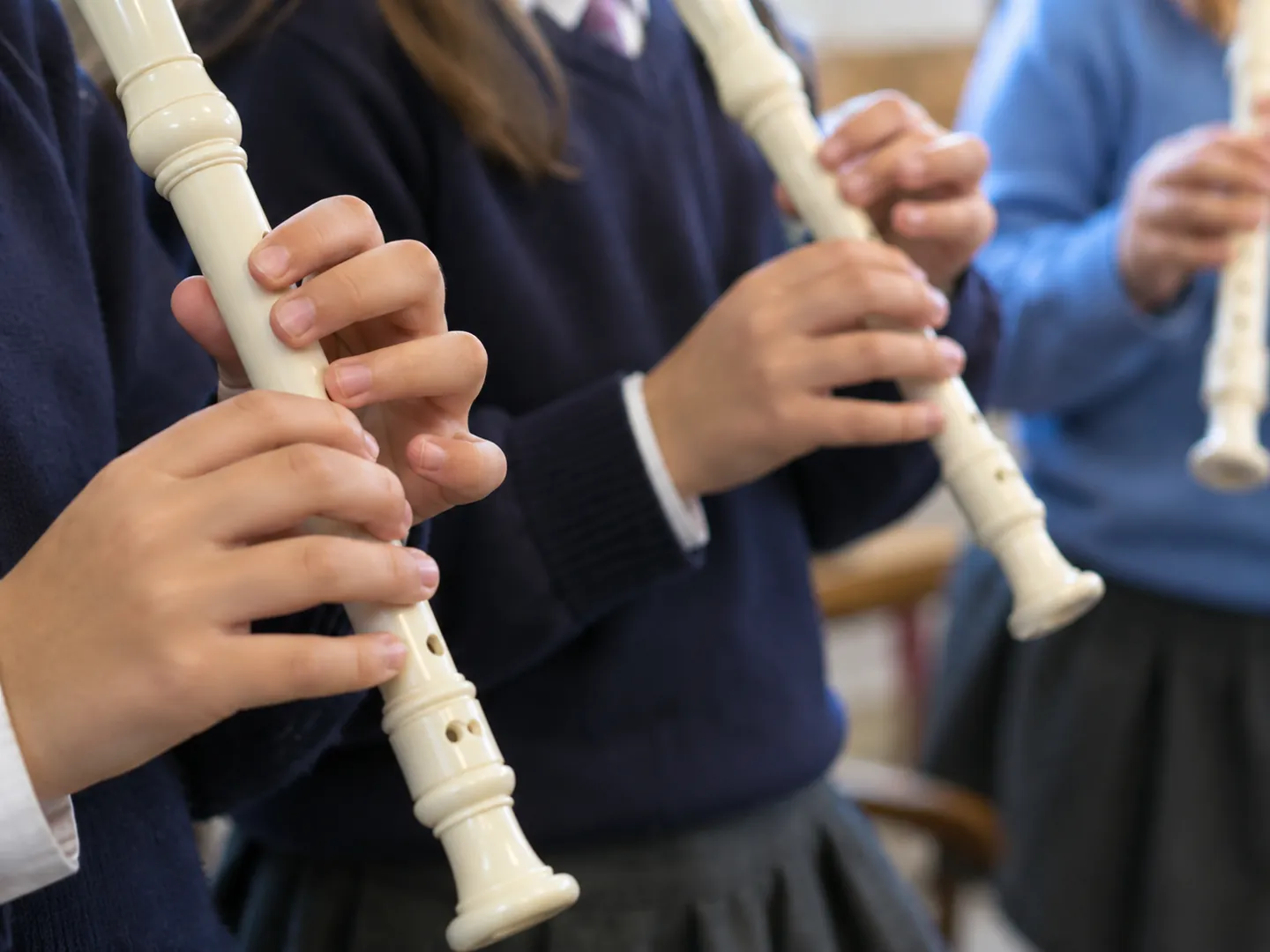
The plan says no one teacher, school or organisation can deliver every part of a rounded music education alone. Schools teach the curriculum; music hubs work with teachers and run groups and lessons in and out of school.
The first national plan, The importance of music, came out in 2011. The 2022 plan refreshes it with a vision to 2030 and asks every school to have a music development plan.
Questions
The national plan says schools should deliver high-quality curriculum music for at least one hour a week in key stages 1 to 3. It describes this as an aim that will take time to realise.
Music hubs provide music education across England. They work with teachers in classrooms, run choirs, orchestras, bands and other groups, and offer music outside school. Arts Council England has their contact details.
A programme where a whole class learns instruments together, usually in key stage 2. The plan says it should include every child in the class and ideally last at least one year.
Look for the summary of the school's music development plan on its website. Schools were asked to publish one before the 2024 to 2025 school year and update it each year.
The national curriculum expects pupils in key stage 2 to use and understand staff and other musical notations, and pupils in key stage 3 to use them accurately.
Sources
ABOUT THIS NAME
soundboardkids.com is part of the DoodleSale portfolio. It isn't in an auction right now, but you can ask about leasing it.